February 17, 2026
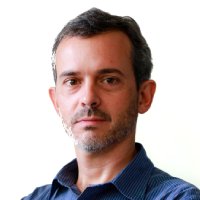
Martha de Sá is the Founder and CEO of Violet, a Brazil-based climate finance company that builds the financial and technological infrastructure needed to connect institutional capital to nature-based solutions at scale. The Low-Carbon Agriculture Transition Mechanism (LATM), a 2023 Lab instrument, planted the seed for Violet to emerge by validating the blended finance architecture that underpins its model today. By translating Lab innovation into credit reaching farmers and communities on the ground, Violet demonstrates how the Lab Network can move from concept to implementation and deliver real impact.
“Financial inclusion and conservation are mutually reinforcing — when smallholders have access to credit and technical assistance, they don’t need to clear more forest to increase income.”
Martha de Sá, Founder & CEO, Violet
Tell us about your organization's climate finance goals and achievements.
Violet is a climate finance company building the connective tissue between institutional capital and nature-based solutions at scale. We focus on what we call the missing middle: the gap between global capital eager to invest in nature and the smallholder farmers and communities who need it most but lack access to traditional financial systems.
The Low-Carbon Agriculture Transition Mechanism (LATM), developed during the 2023 Lab cycle, was the seed for founding Violet. It validated what we’d seen in practice: that the barrier to scaling nature finance isn’t lack of capital, but the absence of platforms, processes, and partnerships that can translate investor appetite into credit flowing to producers.
Through the Kawá Sustainable Cocoa Fund in partnership with Instituto Arapyaú, we’ve so far disbursed credit to 137 smallholder cocoa farmers in Bahia and Pará, with a pipeline to reach 1,500 producers in the first closing.
At VERT, we’ve also structured the Amazônia Viva with Natura (formerly the Amazônia Sustainable Supply Chains Mechanism, a 2021 Lab instrument). It is the first CRA (agribusiness receivables certificate) connecting 1,800 families supplying ingredients from the Amazon to international investors, with zero default to date.
Our technology platform is central to how we operate. It integrates public databases (land registry, embargo lists, credit bureaus), satellite imagery for environmental monitoring, and field data collected by agents, automating due diligence while maintaining rigor. What used to take 12 producers four hours of manual work now takes five minutes with better data quality. This isn’t technology for technology’s sake, it’s what makes small-ticket, high-volume operations economically viable.
Our digital identity system AgroID was selected as a Featured Project in Brazil’s Central Bank LIFT Data program in 2025, validating our approach to enabling credit access for producers without traditional banking history. To give you a sense of the gap we’re addressing: 80% of the farmers we’ve financed had never accessed formal credit before.
In your view, what should climate finance actors be paying more attention to?
Nature as a solution, not just as an environmental cause, but as a cost-effective, scalable pathway to decarbonization, food security, and economic development.
Brazil has over 100 million hectares of degraded land that could be restored or converted to sustainable production. Nature-based solutions are among the cheapest pathways to carbon removal, yet they receive a fraction of climate finance compared to energy transition, for example. The math is compelling: investing in smallholder agriculture and forest restoration delivers climate mitigation, biodiversity protection, and rural livelihoods simultaneously.
But to unlock this potential, climate finance actors need to invest in the boring middle layer: origination platforms, guarantee mechanisms, and technical assistance that make it possible to aggregate small-scale projects into investable portfolios. This connective tissue is severely underdeveloped.
Technology is changing this equation. The integration of satellite imagery, AI-powered analytics, and digital payment systems is making it possible to monitor, verify, and transact at scales and costs that were impossible five (or even two!) years ago. We can now track land use changes in near real-time, automate credit scoring for farmers without banking history, and sign loans via WhatsApp to producers in remote areas.
In the pilots that mirror our cocoa portfolio, we’ve seen productivity increases of 50% and income increases of 60% within three years. Financial inclusion and conservation become mutually reinforcing.
What does your organization gain from the Lab Network?
The Lab was instrumental in validating and refining the LATM structure. The working group feedback helped us think through the guarantee mechanism and blended finance architecture in ways that made implementation possible.
Beyond the specific instrument, the network provides a global perspective that’s invaluable. We’re facing challenges in Brazil that practitioners in Africa, Southeast Asia, and other regions are also tackling — aggregation of smallholder projects, risk pricing for new asset classes, and balancing standardization with local context. Learning from their approaches can accelerate our own development.
The Lab also provides credibility with international investors who don’t know the Brazilian context. When we’re explaining our approach to DFIs or impact investors, the Lab endorsement serves as a quality signal that accelerates conversations.
What are the most significant barriers to climate finance in the private sector?
Nature is still an emerging asset class. It’s similar to where renewable energy was a decade ago: the potential was clear, but the track records, pricing models, and standardized due diligence processes hadn’t yet been built.
Unlike energy, where you have lots of data on solar panel performance and wind turbine yields, nature-based solutions require building the evidence base as we go. Each project is contextual: soil conditions, climate patterns, community dynamics, supply chain relationships. This makes standardization challenging, and without standardization, transaction costs stay high.
There’s also a communication challenge. We work with producers in rural areas (often with limited connectivity and literacy), corporations with their own priorities, and investors who interpret the same information through a very different lens. Our role is to translate across these perspectives and build common ground.
What does your organization bring to the Lab Network?
Practical experience in taking Lab instruments from concept to farmers with credit in their hands. The journey taught us what works in the field versus what works on paper; lessons we’re happy to share with other proponents.
We also bring deep expertise in financial structuring and innovative mechanisms. Having co-founded VERT Capital (with over USD 13 billion in securitization transactions), we understand how to design instruments that meet regulatory requirements, satisfy investor due diligence, and reach the intended beneficiaries.
Perhaps most importantly, we bring a commitment to simplicity. There’s a tendency in this market to create complexity, thinking it provides greater security and rigor. But the real complexity lies in translating multiple layers into simple, effective actions.
Other than the Lab, what other climate finance initiatives is your organization engaged in?
Several complementary initiatives building on what we’ve learned:
- Amazônia Viva — Structured with Natura and IFC, this was the first CRA connecting Amazon cooperatives to capital markets. It demonstrated that traditional communities can access formal credit and maintain zero default when supported by quality technical assistance. The model is now being replicated.
- PRONAF-Transição — A project in partnership with Instituto Arapyaú and Porticus Foundation proposing a new rural credit line for the 85% of family farmers currently excluded from Brazil’s main agricultural credit program.
- Forest Restoration Guarantee Fund — In a structuring phase through the Nature Investment Lab, focused on guarantee mechanisms for forest restoration financing.
- PagBoi — A cattle traceability and payment system developed with TNC, enabling instant Pix payments to ranchers managed entirely through WhatsApp.
We also operate Instituto Violet, our nonprofit arm, which receives philanthropic capital, invests concessionally, and coordinates technical assistance partners — enabling, among others, the blended finance structures that make our commercial vehicles possible.
How can others in the Lab network learn about your work and cooperate with you?
Reach out directly at martha@violet.earth, visit violet.earth, or connect on LinkedIn.
We’re also happy to host Lab network members who want to see our work on the ground. There’s no substitute for visiting a cocoa farm in Bahia to understand what the last mile really means.